Car maintenance requires a combination of basic tools, specialized equipment, and safety gear to handle tasks ranging from simple inspections to complex repairs. Below is a comprehensive list categorized by purpose:
1. Basic Hand Tool
Wrenches & Sockets:
Combination wrenches (metric and SAE)
Ratchet wrench set with socket extensions
Torque wrench (for precise bolt tightening)
Screwdrivers:
Flathead and Phillips head (various sizes)
Precision screwdrivers for electronics
Pliers:
Needle-nose, slip-joint, and locking pliers
Wire cutters/strippers for electrical work
Hammers:
Rubber mallet (to avoid damaging parts)
Ball-peen hammer
Hex/Allen Keys: For modern vehicles with hex bolts.
2. Lifting & Support Equipment
Hydraulic Floor Jack: For lifting the vehicle (3–5-ton capacity).
Jack Stands: To securely hold the vehicle after lifting.
Vehicle Ramps: Alternative to jacks for oil changes or inspections.
Creeper: A wheeled board for sliding under the car.
3. Diagnostic & Electronic Tools
OBD2 Scanner:
Basic code readers (e.g., for check engine lights).
Advanced scan tools (e.g., Launch Tech X431, Autel MaxiCOM) for live data and module coding.
Multimeter: For testing batteries, alternators, and circuits.
Battery Load Tester: Checks battery health and charging system.
Spark Plug Tester: Identifies misfires.
4. Fluid Maintenance Tools
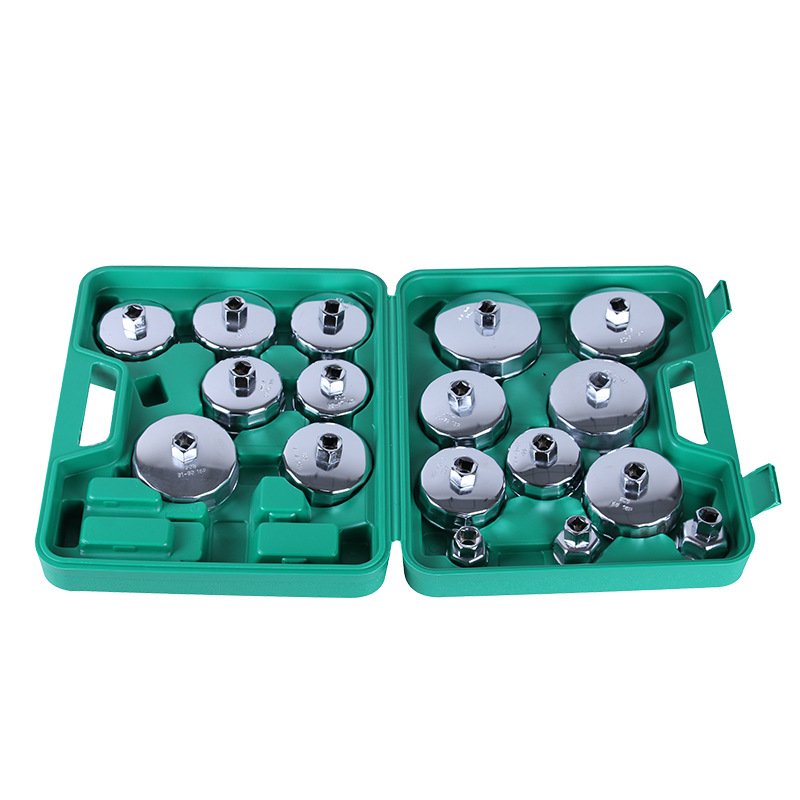
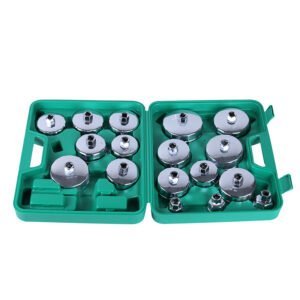
Oil Filter Wrench: Removes tight oil filters.
Fluid Extractors: For draining oil, coolant, or brake fluid.
Funnel Set: To avoid spills when refilling fluids.
Brake Bleeder Kit: For flushing brake fluid.
5. Tire & Wheel Tools
Tire Pressure Gauge: Digital or analog.
Tire Inflator: Standalone or 12V-powered.
Tire Changer & Balancer (for shops):
Semi-automatic or fully automatic machines (e.g., Hunter Engineering or Aucma models).
Wheel Lug Nut Wrench: Cross-shaped or impact wrench.
Tire Repair Kit: Plugs and patches for punctures.
6. Brake System Tools
Brake Caliper Piston Tool: Retracts pistons during pad replacement.
Brake Line Flaring Tool: For custom brake line repairs.
Disc Brake Spreader: Compresses calipers.
7. Engine & Transmission Tools
Timing Light: For ignition timing adjustments (older engines).
Compression Tester: Checks engine cylinder health.
Engine Hoist: For major repairs (e.g., engine removal).
Oil Catch Pan: Collects used oil during changes.
8. Cleaning & Lubrication Tools
Parts Washer: For degreasing components.
Air Compressor & Blow Gun: Cleans debris from engines and brakes.
Grease Gun: Lubricates chassis components (e.g., ball joints).
9. Safety Gear
Gloves: Nitrile (chemical-resistant) or mechanic gloves.
Safety Glasses/Goggles: Protects eyes from fluids and debris.
Fire Extinguisher: Class B (for flammable liquids).
First Aid Kit: For minor injuries.
10. Specialty Tools for Advanced Repairs
Suspension Tools:
Spring compressors (for strut replacement).
Ball joint separator.
AC Service Tools:
Refrigerant recovery machine.
Manifold gauge set.
Exhaust System Tools:
Oxygen sensor socket.
Exhaust pipe cutter.
11. Consumables & Supplies
Motor Oil & Filters: As per vehicle specifications.
Antifreeze/Coolant: Pre-mixed or concentrate.
Brake Fluid: DOT 3, 4, or 5.1.
Grease & Lubricants: Silicone spray, white lithium grease.
Shop Rags & Degreasers: For cleanup.
Professional vs. DIY Setup
DIY Enthusiasts: Focus on basic hand tools, jack/stands, OBD2 scanner, and fluid supplies.
Professional Shops: Invest in advanced diagnostic tools, tire changers, lifts, and specialty equipment (e.g., alignment machines).